Best Cooling Systems in Europe: 2026 Buyer's Guide
From coastal humidity to dry inland heat, this 2026 buyer's guide helps you match the right cooling system to your home, budget and European climate.
European summers are no longer occasional heat spikes. Across the continent, from the Mediterranean coast to traditionally mild maritime cities, prolonged heatwaves have become a regular feature of June, July and August. Homes built to retain warmth now trap it, and many households are looking for their first proper cooling system.
The trouble is that cooling is not one product but a family of very different technologies, each suited to a particular climate, home and budget. A device that transforms a humid coastal flat can be almost useless in a dry inland one, and vice versa. Choosing badly means wasted money, disappointing comfort and higher energy bills.
This guide walks through every major type of home cooling we sell, explains who each suits, and covers the practical details that matter most: sizing in BTU and kilowatts, noise levels, running costs, energy efficiency and the rules that apply if you rent. Our aim is simple, honest advice so you buy once and buy well.
How to think about cooling before you buy
Before comparing products, it helps to understand what a cooling system actually does. Refrigerant-based air conditioners, whether portable or fixed, move heat from inside your home to the outside. They genuinely lower the air temperature and reduce humidity, which is why they work everywhere. Evaporative coolers and fans, by contrast, do not remove heat from a room; they either add moisture to dry air or simply move air across your skin so you feel cooler.
That single distinction explains most buying mistakes. A fan in a sealed, humid bedroom during a heatwave offers little relief, while a powerful air conditioner in an already damp coastal flat may leave the air feeling clammy unless it dehumidifies well. Matching the mechanism to your climate is the foundation of a good decision.
Three practical factors then shape the final choice for most European households:
- Your home: do you own or rent, and can you fit anything to a wall or window?
- Your climate: is your summer hot and humid, hot and dry, or mild but increasingly warm?
- Your priorities: upfront price, running cost, noise, or whole-home comfort.
Portable air conditioners
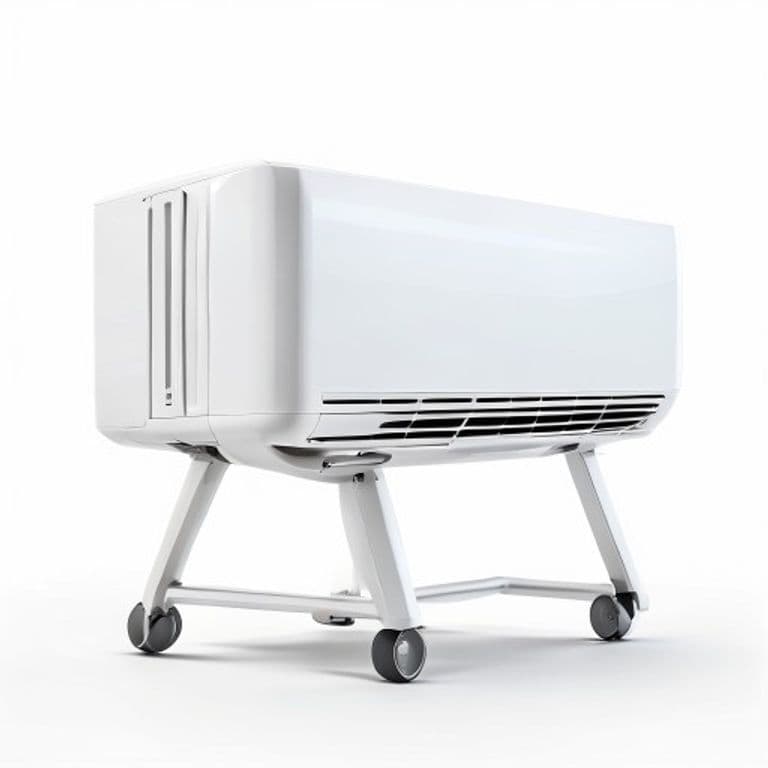
Portable units are the most popular first cooling purchase in Europe, and for good reason. They deliver real refrigerant cooling without installation, roll from room to room on castors, and vent hot air through a flexible hose you place in a window using an included seal kit. For renters and anyone who cannot alter a building, they are often the only practical option.
Who they suit
Portable air conditioners are ideal for tenants, for homes where drilling through walls is not allowed, and for anyone who wants to cool one or two rooms rather than a whole house. They are especially valued in apartment blocks across Germany, Italy and Spain where fixed external units are restricted by the building or the lease.
Pros and cons
The strengths are convenience and flexibility; the trade-offs are noise and efficiency. Because the compressor sits inside the room, portables are louder than a split system and slightly less efficient, as the venting hose radiates some heat back into the space.
- Pros: no permanent installation, movable, effective cooling and dehumidification.
- Cons: louder than fixed systems, needs a window for the hose, single-room coverage.
Sizing, noise and running cost
Sizing is measured in BTU. As a rough guide, a room of up to 20 square metres needs around 9,000 to 10,000 BTU, while 25 to 35 square metres suits 12,000 to 14,000 BTU. South-facing rooms, top-floor flats and spaces with large windows should move up a size. Expect noise around 50 to 65 decibels, so look for a quiet or night mode for bedrooms. Running cost is modest for occasional use; a 14,000 BTU unit drawing roughly 1.3 to 1.5 kilowatts costs only a few cents an hour to run at typical European electricity prices, though heavy daily use adds up.
Split and wall-mounted systems
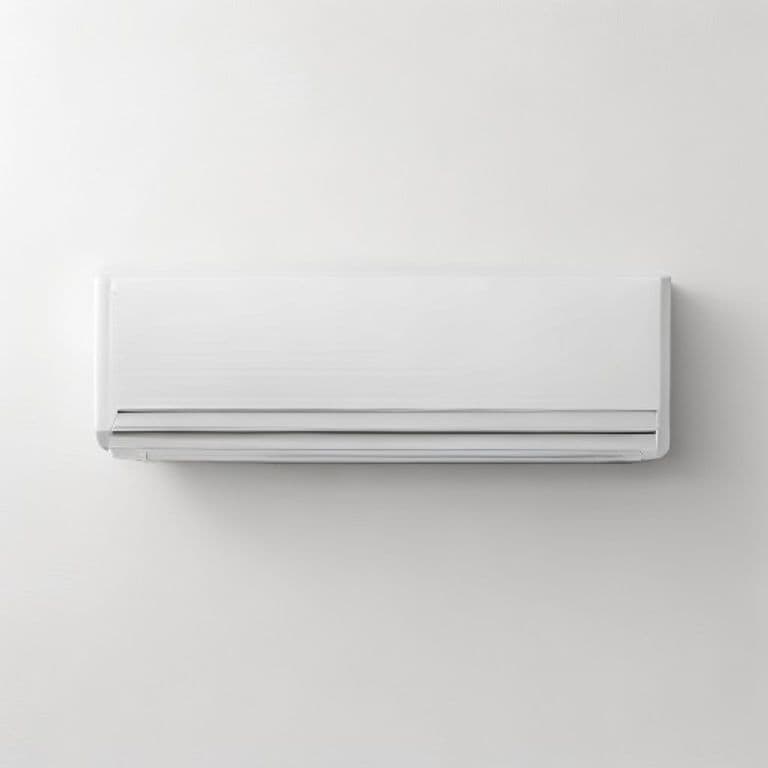
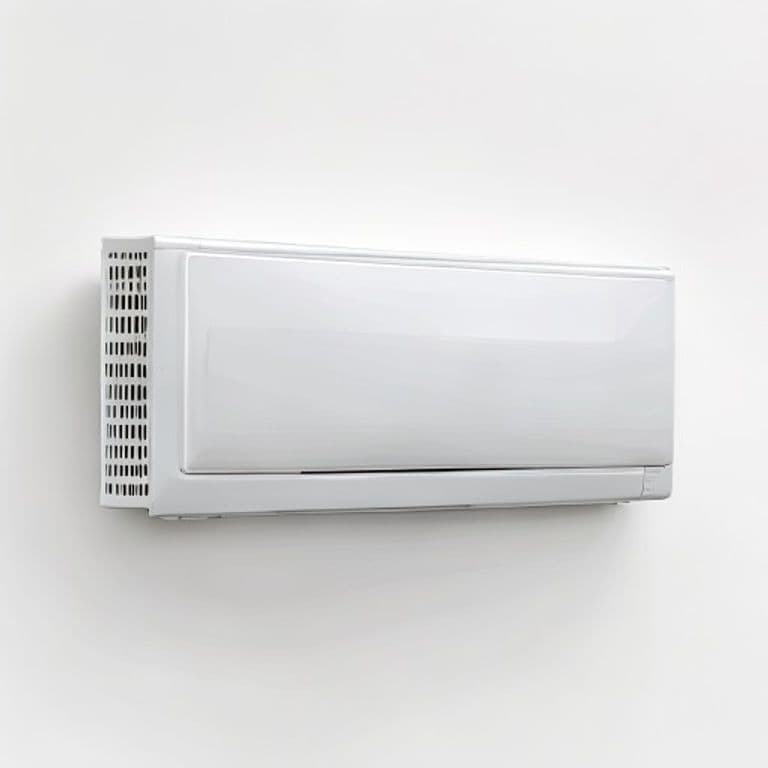
Split systems are the gold standard for permanent home cooling. An indoor wall unit is connected to an outdoor compressor, keeping the noisy machinery outside. Modern inverter models are remarkably quiet, highly efficient and can both cool in summer and heat in winter, making them a genuine year-round investment. Many double as an economical heat pump, which is increasingly attractive as Europe moves away from gas.
Who they suit
Splits are the best choice for homeowners, for rooms used every day, and for anyone who wants the quietest, most efficient cooling available. They require professional installation and an external unit, so they are less suited to listed buildings or flats where the facade cannot be altered. Always check your lease or building rules first.
Sizing, noise and running cost
Split capacity is given in kilowatts rather than BTU. A 2.5 kilowatt unit comfortably cools a bedroom or study of up to about 25 square metres, a 3.5 kilowatt unit suits a living room of 25 to 40 square metres, and larger open-plan spaces call for 5 kilowatts or more. Indoor noise can fall below 20 decibels on low, quieter than a whisper. Thanks to inverter technology, running costs are the lowest of any air conditioner type, as the compressor modulates its output instead of switching fully on and off.
Window units, evaporative coolers and fans
Beyond portables and splits sit three simpler categories. Each has a clear niche, and for the right home and climate they can be the smartest, most economical choice of all.
Window air conditioners
A window unit sits in a single self-contained box fitted into a suitable window or wall opening. It is more efficient and quieter than a portable of the same capacity because there is no long hose, and it frees up floor space. The catch is the window: many European casement windows that open outward or inward are unsuitable, so window units work best where you have a sash or a fixed opening that can accept one.
- Best for: homes with a compatible window and a wish for permanent single-room cooling.
- Watch for: window shape, weight and any tenancy restrictions on external appearance.
Evaporative air coolers
Evaporative coolers draw warm air through a water-soaked pad, cooling it as the water evaporates. They use a fraction of the electricity of an air conditioner and need no hose or installation, but they only work well in dry heat. In the hot, arid interiors of Spain, southern France and inland Italy they are excellent value; on a humid coastline they add moisture and can make things feel worse.
- Best for: hot, dry inland climates and open, well-ventilated spaces.
- Avoid in: humid coastal or maritime regions where the air is already damp.
Tower and pedestal fans
Fans do not lower air temperature, but by moving air across the skin they make a room feel several degrees cooler and cost almost nothing to run. A quality tower or pedestal fan is the most affordable comfort upgrade, ideal for milder northern homes, for gentle overnight airflow, or alongside an air conditioner to spread cool air further. Bladeless tower designs are particularly quiet and safe around children.
Matching technology to your European climate
The right cooling system depends heavily on where you live. Europe spans several distinct summer climates, and each rewards a different approach.
- Hot and humid Mediterranean coast (coastal Spain, southern Italy, Greece, Portugal, southern France): choose refrigerant cooling that also dehumidifies. Split systems and portable air conditioners perform best; avoid evaporative coolers, which add unwanted moisture.
- Hot and dry inland (central Spain, inland Italy, parts of southern France, Hungary): evaporative coolers shine here and cost little to run. Split or portable AC remains the premium option for guaranteed comfort on the very hottest days.
- Mild northern and maritime (Netherlands, Belgium, Ireland, Denmark, Sweden, Finland, northern Germany, Poland): summers are shorter but heatwaves now arrive. A quality fan handles most days, while a portable AC or a reversible split system covers the peaks and adds winter heating.
A quick note on humidity
If you are unsure whether your climate is humid or dry, a simple test helps: on a hot day, does sweat evaporate quickly and leave you feeling cooler, or does it linger on the skin? Quick evaporation points to dry heat where a cooler will work; lingering dampness points to humidity, where only a proper air conditioner will truly help.
Energy efficiency, EU labels and refrigerants
Cooling can be run affordably and responsibly if you buy with efficiency in mind. Since running cost and environmental impact are closely linked, the same choices tend to benefit both your bills and the planet.
Every air conditioner sold in the EU carries an energy label graded from A to G, alongside seasonal efficiency figures. For cooling, the key number is the SEER, or Seasonal Energy Efficiency Ratio; a higher SEER means more cooling delivered per unit of electricity. Reversible models also show a SCOP for heating. When two units cool the same room, the one with the higher SEER will cost noticeably less to run over a hot summer.
Two technologies drive modern efficiency. Inverter compressors vary their speed to hold a steady temperature instead of cycling fully on and off, cutting energy use and noise. Newer eco refrigerants such as R32 have a far lower global warming potential than the older R410A they replace, so a current model is kinder to the environment as well as cheaper to run.
- Compare the SEER before price; a higher rating usually repays its cost over a few summers.
- Prefer inverter models for daily use, as they are quieter and markedly more efficient.
- Look for R32 or another low-impact refrigerant on the specification sheet.
- Use an eco or night mode and a sensible target temperature, around 24 to 26 degrees, rather than the coldest setting.
Your buying checklist
Before you order, run through a short checklist to make sure the system fits your home and your life. Taking five minutes here prevents the most common regrets.
- Measure the room in square metres and note its aspect, floor and window size, then match the BTU or kilowatt rating.
- Confirm what you are allowed to fit: renters should check whether hoses, window kits or external units are permitted.
- Check the noise rating in decibels, especially for bedrooms, and look for a dedicated quiet or sleep mode.
- Compare the SEER and energy label, not just the purchase price, to understand the true cost of ownership.
- Decide whether you want cooling only or a reversible unit that also heats in winter.
- Consider a smart thermostat or app control to schedule cooling and avoid running the system in an empty home.
Do not forget smart control
A smart thermostat or connected controller is an inexpensive addition that pays for itself. Scheduling, geofencing and remote control mean your home is cool when you arrive without the system running needlessly all day. Paired with an efficient air conditioner, smart control is one of the simplest ways to keep summer bills down.
Explore related products
Frequently asked questions
What size air conditioner do I need for my room?+
As a guide, allow roughly 9,000 to 10,000 BTU for rooms up to 20 square metres and 12,000 to 14,000 BTU for 25 to 35 square metres. For split systems, think in kilowatts: about 2.5 kilowatts for a bedroom and 3.5 kilowatts for a living room. Move up a size for south-facing rooms, top floors or large windows.
Can I install air conditioning if I rent my home?+
Usually yes, if you choose the right type. Portable air conditioners need no permanent fitting and only a window for the vent hose, making them ideal for tenants. Split systems and window units involve fixing to the building, so you should get your landlord's written permission first and check your lease and any building rules.
Do evaporative coolers work everywhere in Europe?+
No. Evaporative coolers work brilliantly in hot, dry inland climates but poorly in humid coastal or maritime areas, where they add moisture to already damp air. If your summers are humid, choose a refrigerant air conditioner, which cools and dehumidifies at the same time.
How much does it cost to run air conditioning?+
It depends on the unit's power draw, its efficiency and local electricity prices. An inverter split system is the cheapest to run, followed by window units, then portables. Fans and evaporative coolers use very little power. Comparing the SEER rating and using an eco or night mode are the best ways to keep costs low.
What is the difference between a portable and a split system?+
A portable unit is self-contained, needs no installation and vents through a window, but it is louder and slightly less efficient. A split system fixes an indoor unit to the wall with the compressor outside, giving quieter, more efficient, permanent cooling that many models can reverse to provide winter heating.
Which refrigerant should I look for in 2026?+
Look for R32 or another low global warming potential refrigerant. It has replaced the older R410A in most current models, offering better efficiency and a much smaller environmental footprint. A modern, well-rated unit will typically use it as standard.
Ready to beat the heat?
Browse premium cooling and refrigeration systems with free EU shipping and a 2-year warranty.