Energy-Efficient Cooling and HVAC: Cut Bills Across Europe
A practical guide to efficient cooling and HVAC for European homes and businesses, from reading energy labels to inverters, heat pumps, smart controls and eco refrigerants.
Cooling has quietly become one of the fastest-growing lines on European energy bills. Summers are hotter and longer, more homes and small businesses are fitting air conditioning for the first time, and electricity across much of the continent remains expensive by global standards. The result is a simple truth: how efficient your cooling system is now matters almost as much as whether you have one at all.
The encouraging news is that the gap between an average system and an excellent one is enormous. Two air conditioners can deliver exactly the same comfort while one draws twice the electricity of the other. Choose well, control it sensibly and pair it with a few passive measures, and you can cut running costs dramatically without ever feeling less comfortable.
This guide explains how cooling efficiency is actually measured, how to read the EU energy label with confidence, and where the real savings hide, from inverter compressors and reverse-cycle heat pumps to smart thermostats, zoning and modern low-impact refrigerants. It is written for homeowners and businesses right across Europe, and every point is something you can act on. Everything we sell ships free across the EU with a 2-year warranty and a 30-day returns window.
How cooling efficiency is measured
Before you can compare products, you need to understand the numbers on the box. Cooling and heating efficiency are expressed as ratios: how much useful heating or cooling you get out for every unit of electricity you put in. A ratio of 4 means the appliance delivers four kilowatts of cooling for every kilowatt of power drawn, which is why a good heat pump can feel almost too good to be true.
Older labels used EER and COP, which describe efficiency at a single fixed operating point. They are still useful shorthand, but they do not reflect how a system behaves across a whole season of changing weather. That is why the modern, and far more honest, measures are the seasonal ones.
- EER (Energy Efficiency Ratio): cooling efficiency at one rated condition. Higher is better.
- COP (Coefficient of Performance): heating efficiency at one rated condition. Higher is better.
- SEER (Seasonal Energy Efficiency Ratio): cooling efficiency averaged across a typical cooling season, so it counts part-load running too.
- SCOP (Seasonal Coefficient of Performance): the equivalent seasonal figure for heating, vital if you buy a reverse-cycle unit.
Why seasonal figures beat single-point ratings
An air conditioner rarely runs flat out. For most of the summer it works at part load, gently maintaining a set temperature rather than blasting against peak heat. Seasonal ratings capture that real-world pattern, which is exactly where efficient inverter systems pull ahead of older fixed-speed designs.
When comparing two units, always weigh SEER against SEER and SCOP against SCOP. A model with a modest peak EER but a high SEER will usually cost you less over a full season than a unit that looks strong on paper at one operating point but wastes energy the rest of the time.
Reading the EU energy label from A to G
Every air conditioner and heat pump sold in the EU carries an energy label, and it is the single most useful tool a buyer has. The label was rescaled in recent years to remove the confusing clutter of A+, A++ and A+++ ratings, returning to a cleaner A to G scale where A is the most efficient and G the least. Because the scale was made deliberately demanding, very few products reach A today, and that is by design: it leaves room for improvement to be visible.
Crucially, cooling appliances often carry two ratings on the same label, one for cooling and one for heating, because so many are reversible. Read both if you plan to use the unit year round.
What each part of the label tells you
The colour-coded arrow gives you the headline class, but the detail beneath it is where the value lives. Take a moment with the smaller print before you decide.
- The A to G class, shown separately for cooling and, where relevant, heating.
- Annual energy consumption in kilowatt-hours, which you can multiply by your local price per kWh for a rough yearly cost.
- Rated cooling and heating output in kilowatts, which tells you whether the unit suits your room size.
- The declared SEER and SCOP values, the most reliable way to compare like with like.
- A sound power level in decibels, worth checking for bedrooms and quiet offices.
- The heating climate zones, since heating performance is quoted for average, warmer and colder European climates.
Turning the label into a running cost
To estimate an annual bill, take the labelled cooling energy consumption in kWh and multiply it by your electricity price. If a unit lists 180 kWh of seasonal cooling use and you pay 0.30 euros per kWh, that is roughly 54 euros a season for cooling. Do the same sum for a cheaper, less efficient model and the difference over a ten-year life is often several hundred euros, frequently more than the price gap at purchase.
Because electricity prices vary widely, from lower tariffs in parts of the Nordics and Iberia to some of the highest rates in central Europe, the payback on an efficient unit is strongest exactly where power is dearest. The higher your tariff, the more a high SEER pays you back.
Inverter versus fixed-speed compressors
The compressor is the heart of any air conditioner or heat pump, and the way it is controlled is the biggest single factor in efficiency. Older fixed-speed compressors work like a light switch: fully on until the room hits temperature, then fully off, then on again. Each restart draws a surge of power and the room temperature swings noticeably around the set point.
An inverter compressor instead varies its speed continuously, like a dimmer rather than a switch. It ramps up to cool a hot room quickly, then eases back to a gentle, steady output that simply balances the heat creeping in. This part-load running is quieter, holds temperature far more precisely and, critically, uses much less electricity over a season.
- Lower running costs, because the compressor avoids repeated high-power restarts.
- Higher SEER and SCOP figures, since inverters shine at the part loads that dominate real use.
- Quieter operation, with no abrupt cycling on and off through the night.
- Steadier comfort, typically holding a room within a fraction of a degree.
- Longer equipment life, as smoother running reduces mechanical stress.
Reverse-cycle heat pumps for year-round efficiency
If you are installing cooling anyway, a reverse-cycle unit is often the smartest money you will spend, because the same machine heats in winter. A heat pump does not burn fuel to make heat; it moves existing heat from outside to inside, which is why its SCOP can sit around three to five. In plain terms, it can deliver three to five units of warmth for every unit of electricity, comfortably outperforming direct electric heaters and, in many cases, undercutting the running cost of gas.
For much of Europe, where winters are cool rather than extreme, a well-chosen air-to-air heat pump can cover a large share of heating demand at a fraction of the carbon and cost of older systems. It also simplifies life: one system, one installation, one set of controls for both seasons.
When comparing reverse-cycle models, look hard at the SCOP figure for the climate zone that matches where you live. A unit tuned for a mild Mediterranean winter behaves differently in a Baltic one, and the label spells out performance for average, warmer and colder zones so you can match the machine to your reality.
Smart thermostats, zoning and controls
The most efficient hardware still wastes energy if it runs when nobody needs it. Controls are where good habits become automatic, and where many households find their easiest savings. A smart thermostat learns your routine, responds to occupancy and can be steered from your phone, so you are no longer cooling an empty home or heating an empty office at the weekend.
Zoning takes the same idea further by cooling only the rooms in use. Rather than conditioning an entire property to one setting, you treat bedrooms, living spaces and offices as separate areas, each with its own schedule and target. For a business with meeting rooms that sit empty for hours, the savings can be substantial.
Getting the most from a smart thermostat
A smart thermostat pays for itself fastest when you let it do its job. Set sensible defaults, allow it to learn, and resist the urge to override it constantly.
- Aim for around 26 degrees for cooling; every degree lower can add roughly a tenth to running costs.
- Use schedules so the system eases off overnight and when the space is empty.
- Enable geofencing or occupancy sensing so cooling follows people, not the clock alone.
- Turn on eco or adaptive modes that pre-cool during cheaper tariff periods where you have time-of-use pricing.
- Review the app's energy reports monthly to spot waste and tune your schedules.
Simple zoning for homes and small businesses
You do not need a complex ducted system to benefit from zoning. A few practical steps deliver most of the gain.
- Fit individual room units or multi-split systems so each space can be controlled alone.
- Keep internal doors closed when cooling a single room to stop conditioned air escaping.
- Group rooms with similar use and schedule them together to reduce cycling.
- In shops and offices, avoid cooling storerooms and corridors to the same level as customer areas.
Low-GWP refrigerants and eco credentials
Efficiency is not only about electricity; the refrigerant inside the system matters too. Global Warming Potential, or GWP, measures the climate impact of a refrigerant if it leaks. European regulation has been steadily phasing down high-GWP gases, pushing the market towards cleaner alternatives that also tend to run efficiently.
R32 has become the mainstream choice for domestic and light commercial units. It has roughly a third of the GWP of the older R410A it replaced, needs less refrigerant charge for the same duty and typically improves efficiency. R290, which is propane, goes further still with a GWP close to that of ordinary air; it appears increasingly in monoblock and portable designs, though it requires careful handling because it is flammable.
For buyers, the practical takeaway is straightforward: a modern unit using R32 or R290 is both greener and, usually, cheaper to run than an older one on a legacy gas. Choosing current refrigerants also protects you from future servicing headaches as older gases are withdrawn from sale.
- R32: low-to-moderate GWP, high efficiency, the standard for most split systems today.
- R290 (propane): very low GWP, excellent efficiency, common in monoblocks and portables.
- Prefer current refrigerants to avoid rising service costs on phased-out gases.
- A smaller refrigerant charge means less environmental risk if a leak ever occurs.
Passive measures and practical running-cost wins
The cheapest cooling is the heat you never let in. Passive measures cost little, work in every climate and make whatever system you own perform better by reducing the load it has to meet. Combined with efficient hardware and smart controls, they are how European households genuinely cut bills rather than simply moving them around.
Think of it as three lines of defence: stop heat entering, remove heat cheaply when the air outside cools, and only then reach for mechanical cooling. Working through them in order keeps your system running at gentle, efficient part load rather than fighting a losing battle at full power.
- Shade south and west windows with external blinds, awnings or shutters, which are far more effective than internal curtains.
- Improve insulation and draught-proofing so conditioned air stays put; the same fabric that keeps winter heat in keeps summer heat out.
- Use night purge ventilation, opening up when the outside air cools to flush warmth from the building before the next day.
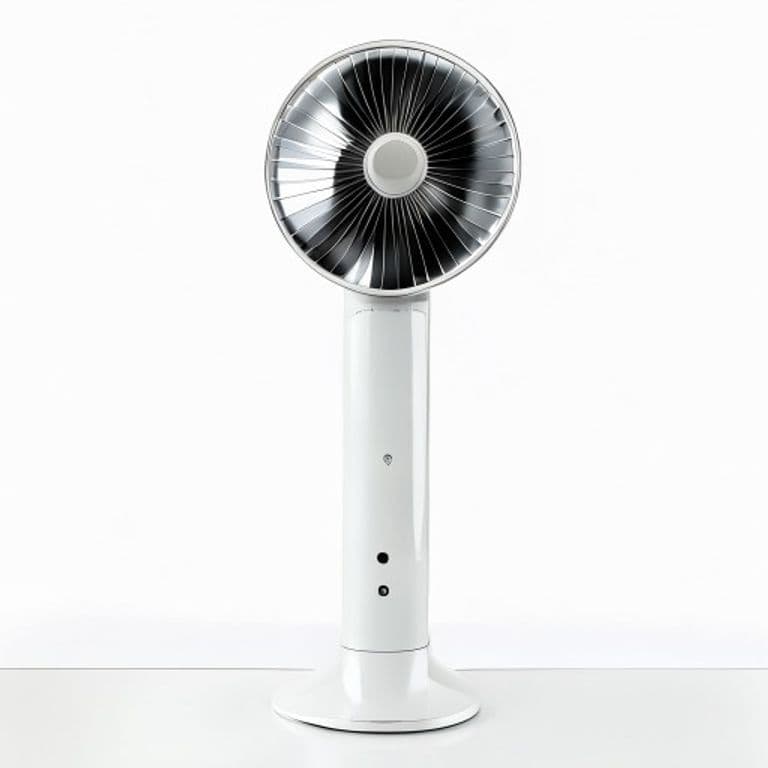
- Run a tower or pedestal fan alongside your air conditioner, so you can set a higher temperature yet feel just as cool thanks to air movement.
- Consider an evaporative cooler in hot, dry regions such as inland Spain, where it cools using a fraction of the energy of refrigerant cooling.
- Service filters and coils regularly; a clogged filter can quietly add a tenth or more to running costs.
Explore related products
Frequently asked questions
What is the difference between SEER and SCOP?+
SEER measures seasonal cooling efficiency and SCOP measures seasonal heating efficiency. Both average performance across a whole season rather than a single operating point, so they reflect real running costs far better than the older EER and COP figures. If you buy a reverse-cycle unit, check both because it heats as well as cools.
Is an inverter air conditioner really worth the extra cost?+
For anything beyond very occasional use, yes. Inverter compressors vary their speed and run efficiently at part load, which is how a system spends most of its life. That means lower bills, quieter operation, steadier temperatures and usually a longer lifespan, so the higher purchase price is typically recovered through energy savings, especially where electricity is expensive.
Can a heat pump really heat my home cheaply in winter?+
A reverse-cycle heat pump moves heat rather than burning fuel, so it can deliver three to five units of warmth per unit of electricity. Across most of Europe's mild-to-cool winters that makes it cheaper and cleaner than direct electric heating and often competitive with gas. Check the SCOP for the climate zone that matches where you live.
What do R32 and R290 mean on a product listing?+
They are refrigerants with low Global Warming Potential. R32 is the current standard for most split systems, with far less climate impact than older gases and better efficiency. R290 is propane, with an even lower impact, common in monoblock and portable units. Both are good signs of a modern, efficient and future-proof appliance.
How much can a smart thermostat save me?+
Savings depend on your habits, but avoiding cooling empty spaces and easing back overnight commonly trims a meaningful share off summer bills. Smart thermostats learn your routine, respond to occupancy and let you adjust settings remotely, so the savings happen automatically rather than relying on you to remember. Each degree closer to the outside temperature helps too.
What temperature should I set for efficient cooling?+
Around 26 degrees is a good target for comfort and economy. Every degree lower can add roughly a tenth to your running costs, so a modest setting paired with a fan, which improves the feeling of coolness through air movement, keeps you comfortable while the compressor works gently at efficient part load.
Ready to beat the heat?
Browse premium cooling and refrigeration systems with free EU shipping and a 2-year warranty.